February 2026 Newsletter

ClaimsPulse360
ClaimsPulse is a monthly newsletter packed with insights and interesting information.
Signup Today!
| Issue: February 2026 | ||||||||||||||||||||
 |
||||||||||||||||||||
|
||||||||||||||||||||
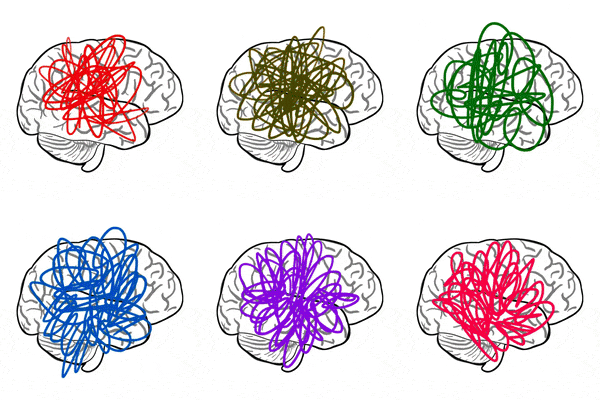
Stay Sane in the Claims Game Why Complex Claims Feel So Heavy If you’ve ever gone home thinking about a catastrophic file while making dinner, you’re not alone. Complex claims feel heavy for a reason. And it’s not just the exposure, the dollars, or the documentation. It’s brain science. Your brain is designed to track unfinished tasks. When something is incomplete, uncertain, or unresolved, your brain keeps it active in the background. It’s like leaving a browser tab open. One open tab is fine. Ten open tabs slow everything down. Fifty open tabs? Now your system feels overloaded. This is called cognitive load. In simple terms, it’s the amount of mental effort your brain is carrying at one time. Complex claims increase cognitive load because they usually involve:
Your brain does not easily "file away" something that feels important or unresolved. Catastrophic claims especially tend to stick at night because there are more unknowns. And the brain does not like uncertainty. It keeps scanning for solutions, even when you’re trying to rest. The good news is you can reduce that mental weight before you leave work. Here are three simple ways to mentally close the loop:
Your brain relaxes when it sees progress and structure. You may not solve the entire file in one day, but you can give your brain a stopping point. Complex claims are heavy because they matter. | ||||||||||||||||||||
|
||||||||||||||||||||
|
||||||||||||||||||||