August 2026 Newsletter – MTI America
Uncategorized

August 2026 Newsletter

August 2026 Newsletter

ClaimsPulse360

ClaimsPulse is a monthly newsletter packed with insights and interesting information.
Signup Today!

Untitled Document
Issue: August 2026

When the Tests Say "Normal," But the Injured Worker Doesn’t Feel Normal

Managing Persistent Head Injury Symptoms in Autistic Adults

One of the most challenging scenarios in workers’ compensation brain injury claims occurs when the diagnostic workup looks reassuring, but the injured worker continues to report significant symptoms.

Now add another layer: the injured worker is an autistic adult.

A question submitted by an attendee at MTI America’s recent Brain & Spine CEU captured the challenge well:

“I had a closed head injury claim involving an autistic adult. It becomes very difficult to manage when the diagnostics show everything is good, but the injured worker remains symptomatic. Where do you go from there?”

It’s an important question because a “normal” test result does not necessarily mean the injured worker has returned to their pre-injury level of function.

Normal Imaging Is Not the Same as No Symptoms

CT scans and MRIs are essential tools for identifying structural abnormalities such as bleeding, fractures, swelling, or other significant pathology. But persistent symptoms following a concussion or mild traumatic brain injury may occur even when conventional imaging does not reveal an obvious structural explanation.

The injured worker may continue to experience:

  • Headaches or dizziness
  • Sensitivity to light or sound
  • Fatigue
  • Sleep disturbances
  • Problems with concentration or memory
  • Balance or vestibular issues
  • Changes in mood or behavior
  • Difficulty tolerating environments or activities that were manageable before the injury

For the claims professional, this creates a difficult situation: How do you move a claim forward when the objective testing and the injured worker’s reported experience do not seem to match?

The answer may be to shift the question from “What does the scan show?” to “What has changed functionally?”

Autism Adds Another Layer to the Clinical Picture

Every autistic adult is different. However, autism can affect communication, sensory processing, routines, emotional regulation, and how discomfort or changes in function are expressed.

That makes establishing the injured worker’s pre-injury baseline particularly important.

Read More

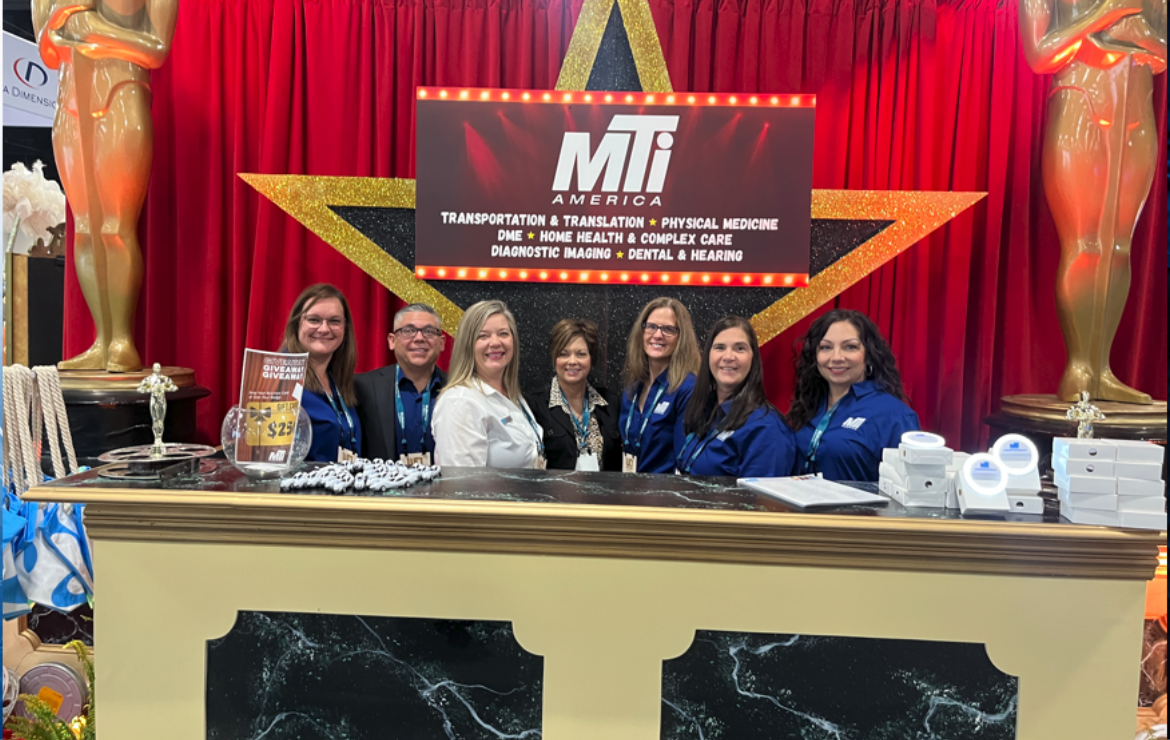
Thank You for Joining Us on the Red Carpet at WCI!

We loved connecting with so many familiar faces and new friends at WCI 2026! Thank you to everyone who stopped by the MTI America booth, said hello, snapped a photo, and spent time with our team.

It’s the relationships we build across the workers’ compensation community that make events like WCI so valuable. Thank you for making WCI 2026 one to remember. We look forward to seeing you again next year!

More Than a Ride: Transportation’s Role in Brain & Spine Injury Recovery

Getting to care safely can be just as important as the care itself.

When managing a complex brain or spine injury claim, attention naturally focuses on the big clinical decisions: specialists, surgery, rehabilitation, therapy, medications, and return-to-work planning.

Read More >>

Sign Up for CE Webinar Alerts >>


EVENTS

LABI Sept. 3, 2026
Webinar
Brain & Spine Claims Management
Register Today!
LABI

Sept. 21–23, 2026
Elevate Work Comp
Coronado, CA

LABI

Sept. 28–30, 2026
NWCDC
Las Vegas, NV

LABI October 22, 2026
Webinar
Streamlining Transportation & Translation Services
Register Today!
View All Events

Stay Sane in the Claims Game
The Ultimate Health Update for Professionals

Feeling Overwhelmed by AI in Workers’ Comp?

AI is everywhere.

Predictive analytics. Automated documentation. Generative AI. Clinical decision support. Fraud detection. Chatbots. Workflow automation.

Every week seems to bring another tool promising to transform workers’ compensation. And if you’re already managing a demanding caseload, injured worker needs, providers, documentation, deadlines and costs, keeping up with AI can feel like one more thing on an already full plate.

Here’s the good news: You don’t have to become an AI expert to benefit from AI.

AI Should Make Your Job Easier

Technology should remove friction from your day not create more of it.

AI can help claims professionals summarize information, automate repetitive tasks, identify patterns, flag claims that may need attention and find important information faster.

But that doesn’t mean you need every new tool.

Instead of asking, “Are we using enough AI?” ask:

“What problem are we trying to solve?”

If a tool doesn’t save time, improve decision-making or help move the claim forward, it may just be adding more noise.

You Don't Have to Chase Every Trend

One of the biggest sources of AI fatigue is the feeling that everyone else is moving faster.

Remember: new doesn't automatically mean better.

Workers’ compensation is complicated. Claims involve medical conditions, individual circumstances, regulations, litigation and, most importantly, people. Technology can support the process, but human experience and judgment still matter.

Think of AI as another member of your support team.

Let it organize information. Let it automate repetitive tasks. Let it identify patterns and help you get to important information faster.

But keep the human in the driver's seat.

Start Small and Stay Smart

You don't need to transform your entire workflow tomorrow.

Pick one area where AI could make your day easier. Maybe it's summarizing a long document, drafting routine communication or finding information buried in a claim file.

Learn one use case. Understand its limitations. Then build from there.

And don't forget privacy and accuracy. Only use AI tools approved by your organization when working with claim, medical or personal information, and always verify important AI-generated information before acting on it.

Stay Sane in the Claims Game

AI isn't going away and you don't need to know everything about it.

Learn what helps. Question what doesn't. And don't confuse adopting more technology with managing claims better.

AI may be changing the claims game, but experience, judgment, communication and human connection are still what keep it moving forward.


Point of Care
Solutions that
Meet Your Needs

MTI America's 360-degree approach to care delivers a comprehensive set of ancillary services to insurers, self-insured employers and TPAs and offers quick coordination with a quality focus.

Physical Medicine MTiRide Transportation Language
Post-Acute Care Home Health & Catastrophic Care Medical Equipment
Diagnostic Imaging Hearing Dental
Phone: 800-553-2155
Visit:
MTIAMERICA.COM
Copyright © 2026 MTI America. All Rights Reserved.